
7 Wabi-Sabi Kitchen Swaps to Stop Sensory Overload, One Surface at a Time
6-Minute Read · Quiet Living Guide · Zero-Renovation Framework
At 6 AM, your kitchen screams before anyone speaks. The overhead LED fires at full glare, cabinet gloss throws it back, and the first pan you touch rings like an iron bell.
Most catalog advice only makes the headache worse. Retailers sell you calm as another cart of beige plastic.
Pause for three seconds and listen to your kitchen right now. Notice the hum of the refrigerator motor, the glowing numbers on the microwave, and the harsh glare bouncing off the sink faucet. That constant acoustic and visual buzz keeps your nervous system on edge before breakfast.
Your daily exhaustion is not an imagined flaw. Kitchens pack harsh glare, sharp echoes, and forty competing decisions into a tight cooking zone. This space bombards your senses with more raw friction than almost any other corner of your home.
The Quiet Surface Test filters every item through three physical checks for glare, acoustic clatter, and cognitive load. The answer requires no messy demolition. You can quiet your cooking space within days using seven simple object swaps.
Let us lower the volume.
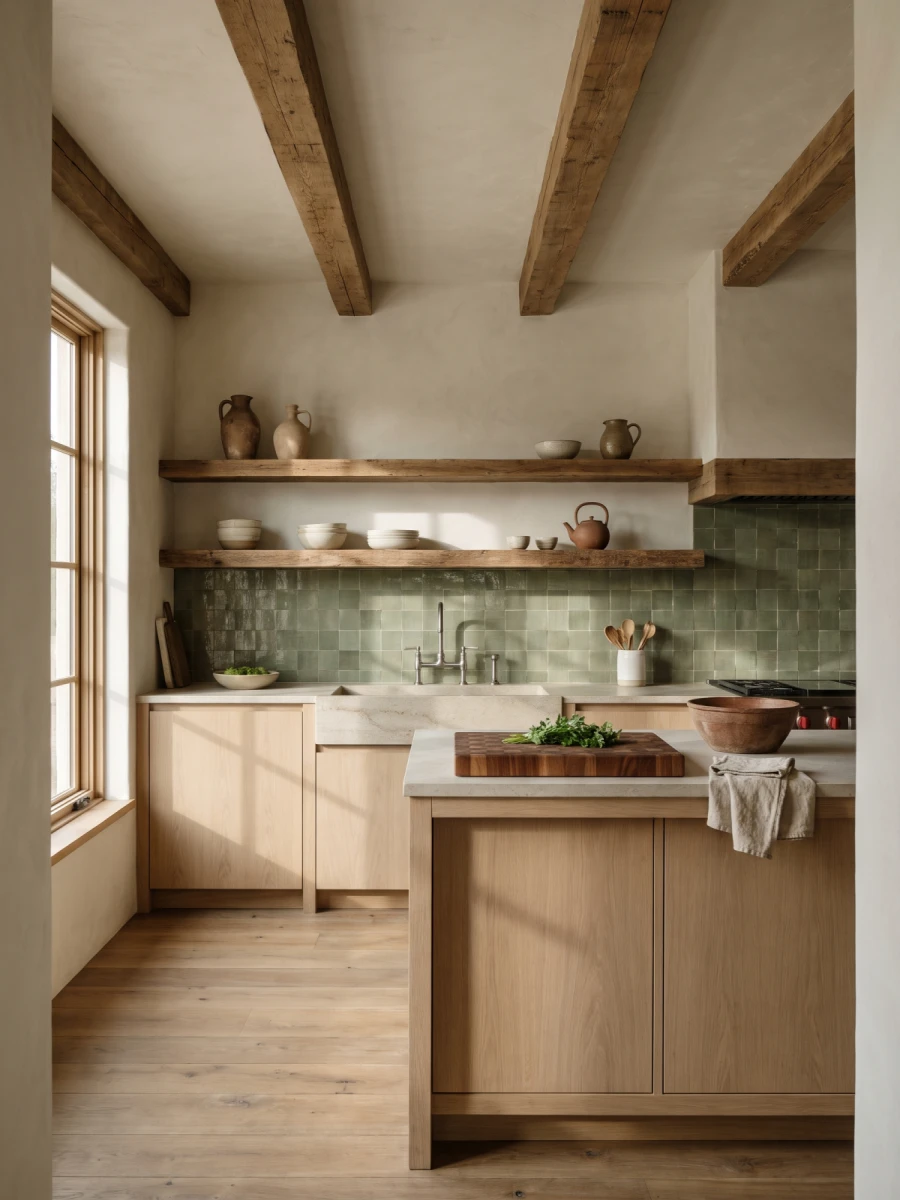
A wabi-sabi kitchen quiets sensory overload by swapping gloss, plastic, and clutter for matte wood, clay, linen, and warm low light. Each swap removes one source of glare, clatter, or visual noise. Start with a single surface tonight.
The 7 Swaps | Quiet Counter Kit | Sensory Audit | Common Questions
Seven Quiet Principles at a Glance
- Matte natural textures absorb optical glare so your peripheral vision can rest while cooking.
- Dense end-grain wood silences prep clatter by absorbing knife impacts into a dull, muffled thud.
- Warm side lighting supports natural circadian rhythms by eliminating harsh overhead task beams.
- Decanting pantry items into clay drops visual cognitive load by hiding commercial packaging.
- Moving at one swap per week builds sustainable calm without the panic of renovation spending.
Why Kitchens Overload Your Senses Before Breakfast
Sensory overload is not a mood. It is hard physics striking your nervous system from three distinct directions at the same time.
First comes optical glare. Glossy cabinets and polished quartz countertops act like mirrors, doubling ambient light and forcing your pupils to constantly adjust.
Second comes acoustic shock. The human ear is biologically tuned to notice frequencies between two thousand and four thousand hertz, which is the exact pitch of dropped cutlery, thin plastic containers, and scraping metal. These high-frequency spikes trigger an involuntary startle reflex that keeps your nervous system on guard before your day even begins.
Third comes cognitive load. Every printed word, corporate logo, and warning label on your counter is an uninvited sales pitch your visual cortex must process and discard.
Traditional wabi-sabi philosophy resolves this friction with one grounding principle. Natural materials carry an uneven tooth and an open grain that swallows light while absorbing the high-frequency clatter of metal and plastic. The hearth prizes honest wear over slick perfection, and fewness over cluttered excess.
Every swap in this field guide answers the three questions of The Quiet Surface Test. Does the object glare, does it ring, and does it shout. If a surface fails these checks, you replace it.
Calm is not an aesthetic style, it is a material decision.
Our Zero-Renovation Selection Standard
Every swap in this guide follows three strict design rules.
First, the item must require zero construction, structural remodeling, or permanent installation. Second, the material must naturally absorb light or sound rather than reflecting it back into the room. Third, the piece must be durable enough to handle daily domestic use and develop an honest patina over time.
These tabletop changes silence a busy kitchen without the expense or disruption of a contractor.
The Seven Swaps That Lower the Volume
Swap 1. Plastic Cutting Board to End-Grain Wood for Acoustic Relief
The feel. Drag a knife edge across a cheap plastic board and you get a shrill squeal that sets your jaw on edge. Chop on thick end-grain walnut and the vertical wood fibers part gently, cushioning the blade like damp soil underfoot. A two-inch board stays firmly rooted on your counter without slipping across the stone.
The design move. Dense hardwood absorbs sound vibration instead of throwing it back into the kitchen, dropping sharp knife clicks down to a quiet thud. The matte walnut grain drinks in morning sunlight, turning knife scars into a living patina rather than permanent plastic damage.
Patina beats plastic every time.
Sourcing and placement. Look for an end-grain maple or walnut board that measures at least one and a half inches thick. Keep it resting on rubber feet near your sink, because a tool this honest deserves permanent counter space. Wash it with warm soapy water, dry it upright, and rub food-safe oil into the grain once each month.
Swap 2. Matching Melamine to Handmade Stoneware for Tactile Weight
The feel. A good hand-thrown stoneware mug weighs close to a full pound in your hand. Run your thumb along the bottom rim and you meet unglazed clay, rough and earthy as river rock. Stack two pottery bowls and they settle with a low, muted knock rather than the brittle clatter of thin factory melamine.
The design move. Twelve identical factory plates make a domestic kitchen feel like an impersonal company cafeteria. Uneven ceramic glazes break that sterile spell through muted oatmeal, ash, and charcoal tones. The soft texture lets your hands ground themselves before your first sip of hot liquid.
Weight reads as rest.
Sourcing and placement. Skip mass-produced uniform dish sets in favor of odd studio pieces or stoneware ceramic dinner plates from independent potters. Two complementary glaze families in warm earth tones build a complete collection without feeling planned. Leave breathing room on your open shelves, because empty space gives your eyes a pause.
Swap 3. Overhead Daylight LEDs to Warm Amber Side Lighting
The feel. Cold 5000K daylight bulbs blast kitchen surfaces like laboratory spotlights, highlighting crumbs, water spots, and cabinet dust while signaling daytime alertness to your brain. Dialing the temperature down to 2200K casts a tranquil amber glow, turning a loaf of crusty sourdough into a warm golden centerpiece.
The design move. Ceiling downlights flatten the kitchen into a single wash of stark brightness that keeps evening stress levels high. Low side lighting placed beneath eye level wakes up natural wood grain and softens hard cabinet corners. A simple plug-in dimmer switch delivers the benefits of an expensive lighting overhaul in two minutes.
Light the kitchen from the side.
Sourcing and placement. Set one small shaded lamp on an open counter corner using an amber bulb. Connect your under-cabinet fixtures to a small dial dimmer, keeping the brightness low while cooking dinner. Reserve the bright ceiling fixture for rare deep scrubbing tasks, never for quiet evening meals.
Swap 4. Rattling Plastic Utensils to Turned Wood and Bamboo
The feel. Rummaging through a drawer packed with nylon spatulas and thin measuring spoons creates an irritating plastic rattle. Wooden spoons rest heavy in the palm, stirring thick stews without scraping or chattering against the pot bottom. The organic wood stays comfortable to hold, never transferring burning heat to your fingers.
The design move. Five well-made wooden tools resting inside an open crock replace forty cheap implements hidden inside a jam-packed drawer. Displaying a curated handful of honest implements removes decision fatigue every time you cook.
Five tools, one crock.
Sourcing and placement. Select beech, cherry, or olive wood cooking spoons alongside light bamboo tongs. Hand wash them after use and never leave them soaking in greasy sink water. When the wood begins to dry or show fuzzy fibers, a light rub with fine sandpaper and board butter restores the smooth finish.
Swap 5. Shouting Packaging to the Decanted Earthen Crock
The feel. Opening a crinkling plastic bag of coffee beans sends a spike of auditory noise through an otherwise quiet morning house. Glossy bags and barcode labels crowd your sightline with competing colors, taglines, and marketing slogans. Branded product packaging turns your private cooking prep space into an accidental billboard.
The design move. Decanting everyday staples like sea salt, rice, and fresh beans into opaque clay crocks and amber jars transforms commercial clutter into quiet raw materials. Keep only the staples you consume within seven days out on the counter.
Decant the noise away.
Sourcing and placement. Use one wide crock near your range for wooden spoons, and set out three amber glass canisters with airtight seals for your dry essentials. Write date details on the bottom using a grease pencil so notes wipe off cleanly with warm water. This simple pantry shift brings calm order to the entire prep area.
The Quiet Counter Kit for Visual Order
These five foundational pieces work together to clear visual clutter and silence drawer clatter across your cooking counters.
- Stoneware Utensil Crock in Matte Clay
- Glass Pantry Jars with Cork Lids
- Beech Wood Drawer Organizer Insert
- Handmade Ceramic Butter Bell Crock
- China Marker Grease Pencil for Labeling
Swap 6. Synthetic Microfiber Towels to Heavy Washed Slub Linen
The feel. Neon polyester microfiber rags catch roughly on dry fingertips, create static cling, and push spilled water across counters instead of soaking it up. Unbleached flax linen absorbs a spilled glass of water in a single wipe while leaving glassware completely lint-free. Bright printed towels look like loud commercial advertisements hanging across oven bars.
The design move. Natural slub linen in flax, charcoal, and warm clay settles quietly into the background while softening the sharp geometric angles of metal appliances. Hung from a plain wood peg, the crumpled fabric brings relaxed domestic warmth to sterile cabinet rows.
Linen improves with neglect.
Sourcing and placement. Invest in pure washed linen tea towels woven from natural flax fibers. Avoid chemical fabric softeners, which coat the natural flax threads and ruin their organic absorbency. Every tea stain and fold mark adds to the personal history of your kitchen hearth.
Swap 7. Thin Nonstick Skillets to Heavy Seasoned Cast Iron
The feel. A heavy ten-inch cast iron skillet lands on your stove grates with a steady, reassuring weight. The thick iron handle warms gradually in your grip rather than transferring erratic, stinging heat through a hollow metal tube. Physical mass dampens acoustic vibration, stopping thin pans from ringing like cymbals when you stir ingredients.
The design move. The porous matte black iron swallows overhead glare and never releases synthetic fumes at searing temperatures. Seasoning is a deep protective patina that you cook into the pan with your own hands over seasons of family meals.
Mass is the mute button.
Sourcing and placement. A traditional 10-inch pre-seasoned cast iron skillet offers a lifetime of quiet cooking. Carbon steel pans provide a slightly lighter option while sharing the same dampening traits. Hand dry iron cookware right after washing, and wipe a tiny drop of cooking oil across the cooking surface before storing it on your stovetop.
Weight is the first quiet, and everything after that is daily practice.
The Warm Light and Care Shelf Essentials
Pairing gentle amber illumination with basic wood conditioning keeps natural surfaces looking grounded and feeling quiet.
- 2200K Dimmable Warm LED Bulbs
- Plug-In Lamp Dimmer Switch
- Washed Linen Waffle Kitchen Towels
- Food-Safe Mineral Oil for Wood Care
- Pre-Seasoned 10 Inch Cast Iron Skillet
Seven Swaps Side by Side
| Swap | Material | Sensory Payoff | Upkeep |
|---|---|---|---|
| Board | End-grain walnut | Drops knife squeal to a soft thud | Oil monthly, wash by hand |
| Dishes | Hand-thrown clay | Replaces plate clatter with a low knock | Handle gently, hand wash rims |
| Light | 2200K amber bulb | Banishes glare and calms evening eyes | Change bulb once every few years |
| Spoons | Beech and olive wood | Quiets drawer noise to a dull wooden tap | Sand and re-oil when dry |
| Pantry | Clay crock and glass | Hides corporate labels and packaging | Wipe rims, refill weekly |
| Towels | Washed slub linen | Replaces static cling with soft absorbency | Air dry without fabric softeners |
| Skillet | Heavy cast iron | Damps metallic ringing into a steady hum | Dry immediately, wipe with oil |
Field Rules for Sourcing and Placement
- One material family per zone. Keep wood and unglazed pottery on prep counters, and store stainless steel and appliances inside cupboards.
- Leave half the counter bare. If counter space exceeds fifty percent capacity, your visual field reads as cluttered regardless of how beautiful the pieces are.
- Prioritize matte textures at eye level. Every surface you face while prepping meals should swallow light rather than throwing reflections back into your eyes.
- Source secondhand whenever possible. An old cutting board or pottery bowl from an estate sale brings natural wear that manufactured goods can never recreate.
- Earn counter space through daily use. Any tool used less than three times each week belongs in a storage cabinet, without exceptions or sentiment.
- Embrace honorable mending over replacement. A chipped pottery mug tells a story of domestic life, while a cracked plastic container only adds to trash.
Living Rituals That Keep the Quiet
- The evening lamp hour. Boil your evening tea and sit by the counter with only your warm amber lamp glowing. The kitchen transforms into a comforting sanctuary rather than a task workshop.
- The quiet board wipe. Wash your wooden cutting board by hand with warm water, wipe it down, and prop it up to dry. Two unhurried minutes at the sink provide a grounding close to your cooking day.
- The five-minute bedtime clear. Return tools to their rightful crocks and wipe the counters clear before sleeping. Wake up to a quiet kitchen that demands nothing from your eyes.
Patina is time made visible through faithful care.
Pitfalls and the Kitchen Sensory Audit
The first pitfall is attempting to purchase instant calm in a single afternoon. Buying a cart full of brand-new beige items is just consumerism dressed in linen, creating financial guilt while solving little sensory friction.
The second pitfall is factory distressing, where brand-new boards and pottery are battered with tools to fake an authentic history. True patina cannot be rushed, and genuine wear should reflect your own household rhythms.
The third pitfall is mistaking dirt for wabi-sabi character. Grease spots and neglected crumbs are not romantic age, and a peaceful kitchen always demands thoughtful cleanliness.
The Sensory Friction Audit
Score your kitchen from 1 to 5 on each question, where 1 represents severe overwhelm and 5 represents calm grounding.
- Do shiny counters or glossy cabinets cast direct light reflections into your eyes while cooking?
- Does setting down a coffee mug or dinner plate produce a sharp, high-pitched clinking sound?
- Do you routinely touch cold metal, sticky vinyl, or sharp plastic handles during meal prep?
- Does branded food packaging and commercial labeling dominate your primary kitchen sightlines?
- Does your evening cooking happen under harsh overhead downlights instead of soft warm side illumination?
Prescriptive Action Steps Based on Your Score
- A score of 5 to 11 indicates high sensory overload. Start tonight with Swap 3 by installing a 2200K amber lamp and turning off your ceiling cans.
- A score of 12 to 18 points to moderate acoustic and visual clutter. Implement Swap 1 and Swap 5 this weekend to silence knife clatter and decant loud packaging.
- A score of 19 to 25 shows a grounded kitchen environment. Protect your peace by maintaining daily wipe rituals and avoiding unnecessary purchases.
Reclaiming the Hearth: Your First Quiet Surface Starts Tonight
Here is the straight truth. Nobody ever created a peaceful kitchen through an expensive remodel, because remodeling only installs brighter lighting, shinier tile, and louder appliances. The sensory volume of this culinary space is determined by everyday items, and those items are completely within your control.
Stop telling yourself that tranquility must wait for a massive budget or a new house. That future remodel will still buzz and shine, leaving you wondering why your morning coffee still feels frantic.
Walk into your kitchen tonight and choose one small change. Turn off the big overhead fixture, swap a plastic spatula for a smooth wooden spoon, or clear three branded food boxes off the counter.
Your home is ready to exhale. Step over to the counter and turn off the big light.
Common Questions About Wabi-Sabi Kitchen Design
What does wabi-sabi mean for an everyday kitchen?
Wabi-sabi represents an enduring Japanese philosophy focused on finding quiet beauty in natural imperfection, honest utility, and gradual aging. In a working cooking space, this means favoring matte wood, handmade pottery, and objects that show honest wear over time. The concept is never a rigid decorating style or a matching collection you buy in a single shopping trip. It is simply a mindful way of choosing durable tools that quiet the kitchen and serve your hands with grace.
Can renters implement these sensory swaps without remodeling?
Every swap in this guide uses movable tabletop items, meaning that no structural renovation is required to quiet your space. A thick wood board, a heavy pottery crock, linen cloths, and a warm table lamp easily travel with you to your next home. The lighting adjustment requires only a warm amber bulb and an inexpensive plug-in dimmer module. Landlords appreciate that heavy end-grain boards and trivets protect countertops from heat and blade scratches.
How do you maintain seasoned cast iron cookware without smoking out the kitchen?
A properly seasoned cast iron pan cooks cleanly without smoking when maintained with very thin coats of high-smoke-point oil. Excess grease baked onto cold iron creates thick smoke, so always wipe the skillet completely dry before heating it on the range. Cleaning the warm pan with hot water and a stiff Tampico brush removes cooking residue without stripping the cured base. Applying a microscopic drop of neutral oil while the metal is warm seals the iron against moisture without creating rancid odors.
Will open kitchen shelving create more visual clutter?
Open shelving only creates visual chaos when homeowners fail to curate daily tools with strict intention. Limit exposed shelves to five or six items from one unified material family that your household uses every day. Seldom used small appliances and backup food items belong behind closed cabinet doors where they cannot distract your gaze. Clearing prep counters first allows your visual field to rest even if your upper cabinets remain closed.
Why does linen dry glassware better than cotton kitchen towels?
Unbleached flax fibers dry wet glassware without linting because linen lacks the fuzzy surface loops found on terry cloth. Smooth flax threads wick water away from hard surfaces immediately, leaving crystal glasses and ceramic bowls streak-free. Linen releases absorbed moisture into the air twice as fast as cotton, preventing sour damp odors from settling into wet cloth. The natural slub texture provides traction that keeps slippery dinner plates secure in your hands during cleanup.