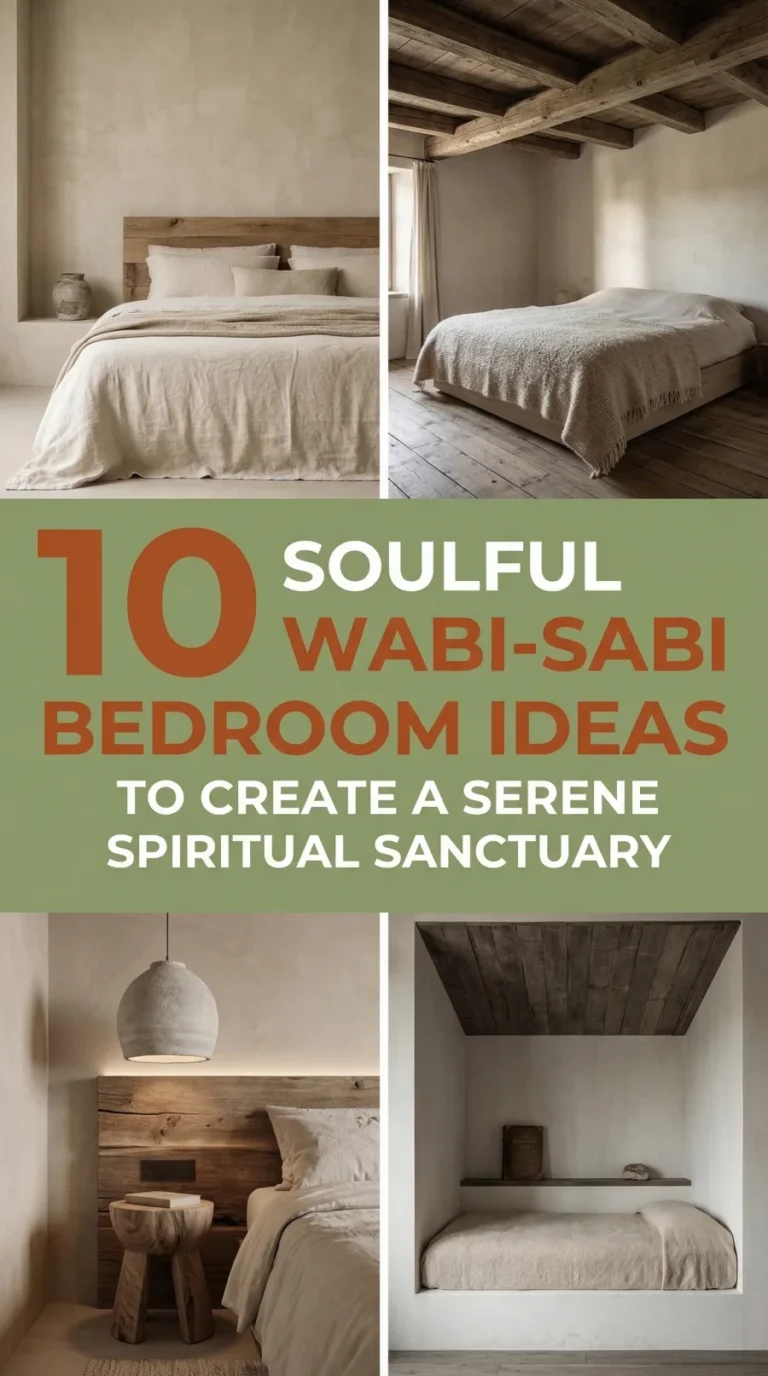
While design influencers keep promising that a $5,000 velvet sofa will fix your life, the reality of maintaining a “perfect” home is utterly exhausting. You can buy the matching showroom set and scrub every scuff off your baseboards, but ask that pristine space to handle a messy Tuesday afternoon and it immediately falls apart.
The obsession with flawless decor misses the human element entirely. If you are tired of living in a sterile museum, you need the grounding philosophy of Wabi-Sabi. This ancient Japanese approach teaches you to stop fighting time and start celebrating the natural wear, organic textures, and honest imperfections of a deeply lived-in space.
So the next time someone tells you your living room needs more modern luxury, ask them this: Can their polished marble floor actually comfort a tired soul? You already know the answer.
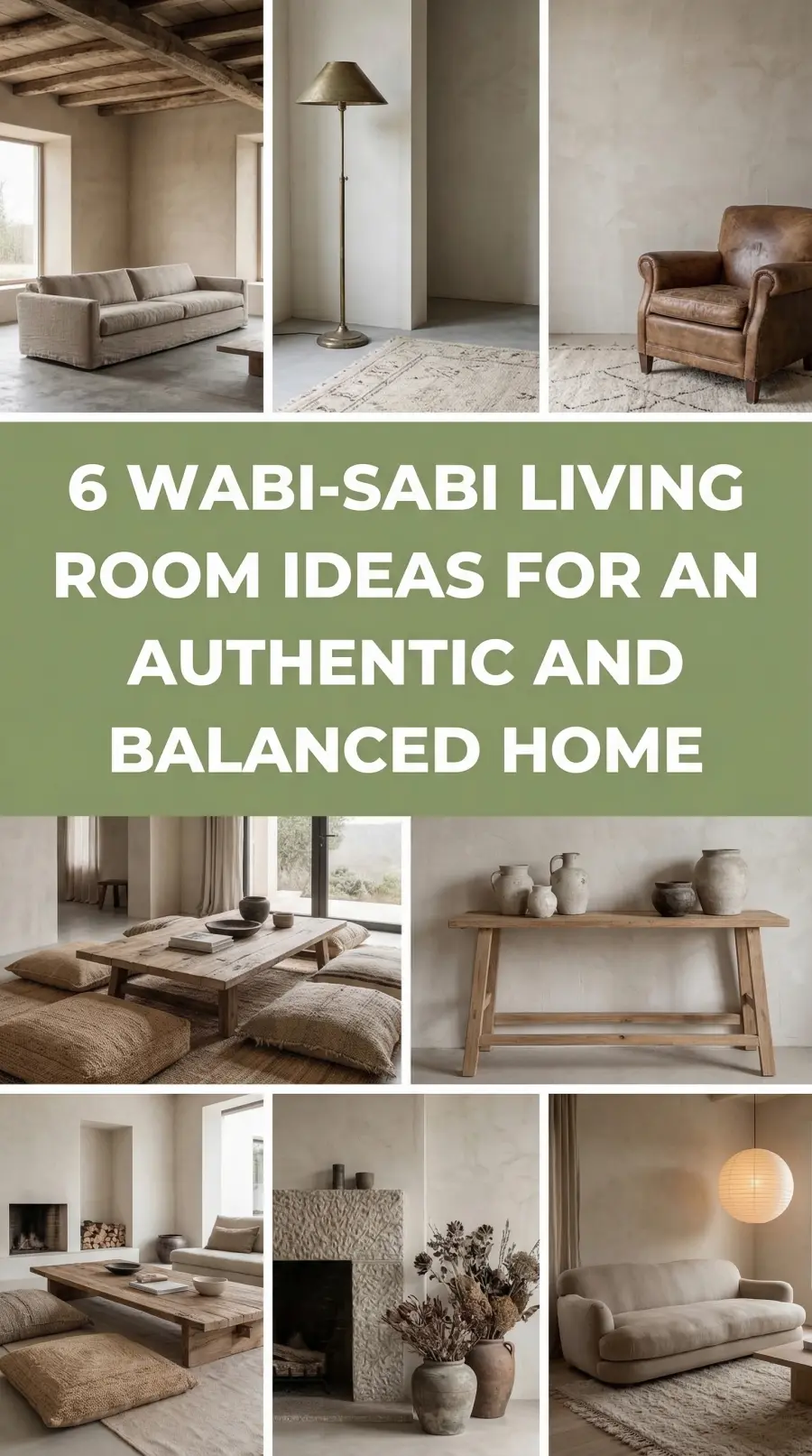
The Most Helpful Wabi-Sabi Living Room Insights
- Visible imperfections tell a story of a life actually being lived.
- Organic materials age gracefully and develop unique character over time.
- Muted earth tones create a calm environment that doesn’t compete for your attention.
- Handmade items carry an energy and honesty that factory goods lack.
- A balanced home keeps only what carries genuine meaning and utility.
6 Wabi-Sabi Living Room Ideas for a Grounded Space
1. Honor the Scars of Your Furniture
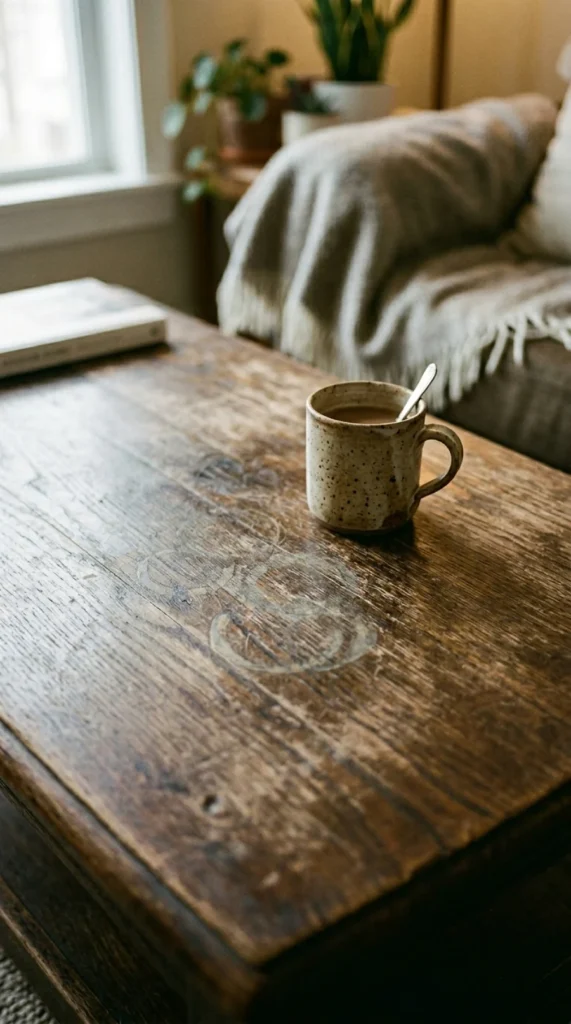
Instead of rushing to repair every scratch or hiding a worn tabletop under a cloth, you should celebrate these marks as signs of a life well-lived. A table with water rings from years of coffee and conversation carries more soul than a pristine showroom piece. These marks are not defects because they are evidence of real connection.
When you stop viewing a dent in the floor or a frayed edge as a failure, you stop being a servant to your objects. You start being their companion instead. This shift in perspective transforms your house into a sanctuary where you no longer feel judged by your own furniture.
2. Introduce Textural Asymmetry
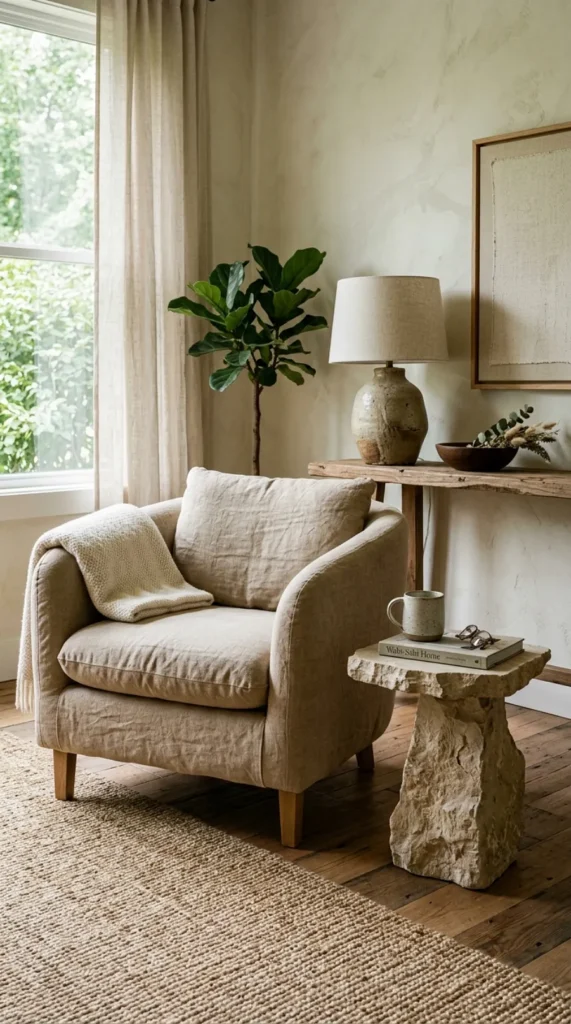
You can break the rigid feel of a modern room by choosing furniture that doesn’t match perfectly. A hand-carved wooden stool placed next to a soft linen armchair creates a visual tension that feels organic rather than manufactured. True balance does not come from identical pairs but from a mix of weights and surfaces.
Imagine a rough and raw-edge stone side table sitting against a smooth and upholstered sofa. That contrast invites the eye to look at the room without the boredom of forced symmetry. It makes the room feel like it grew over time rather than being bought all at once.
3. Use a Muted Earth-Tone Palette
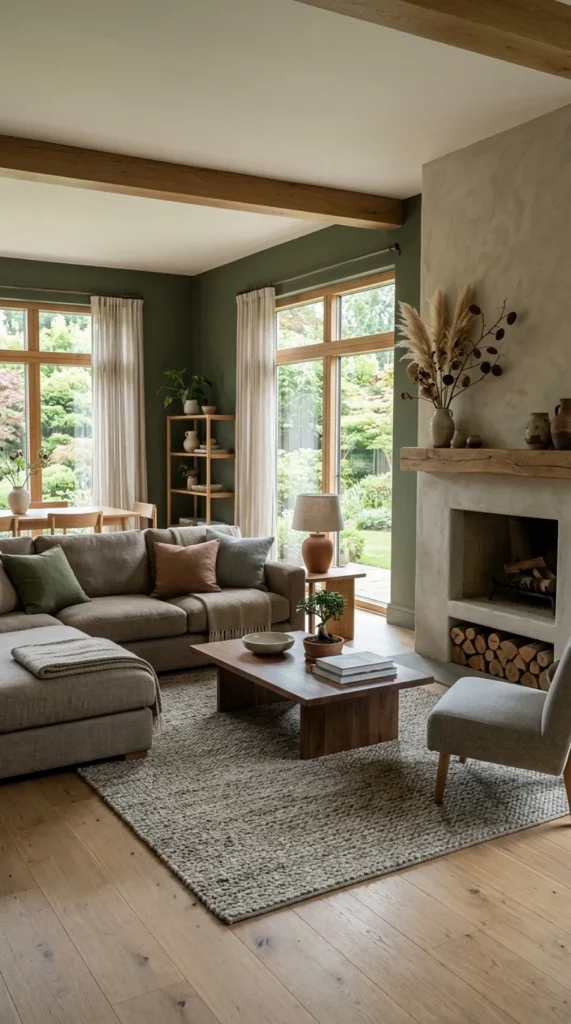
You should lean into shades of stone, moss, and clay to create a backdrop that mimics the natural world. These colors don’t scream for your attention and they allow your mind to settle and your nervous system to regulate after a long day. Avoid the sanitized whites of modern catalogs that feel cold and uninviting.
Instead, you should look for the grey-whites of morning mist or the brown-greys of river stones. When your walls and fabrics mirror the soil and the sky, the room stops feeling like a box and starts feeling like an extension of the earth. You will notice that your anxiety levels drop when your environment isn’t competing for your focus.
4. Incorporate Raw and Organic Materials
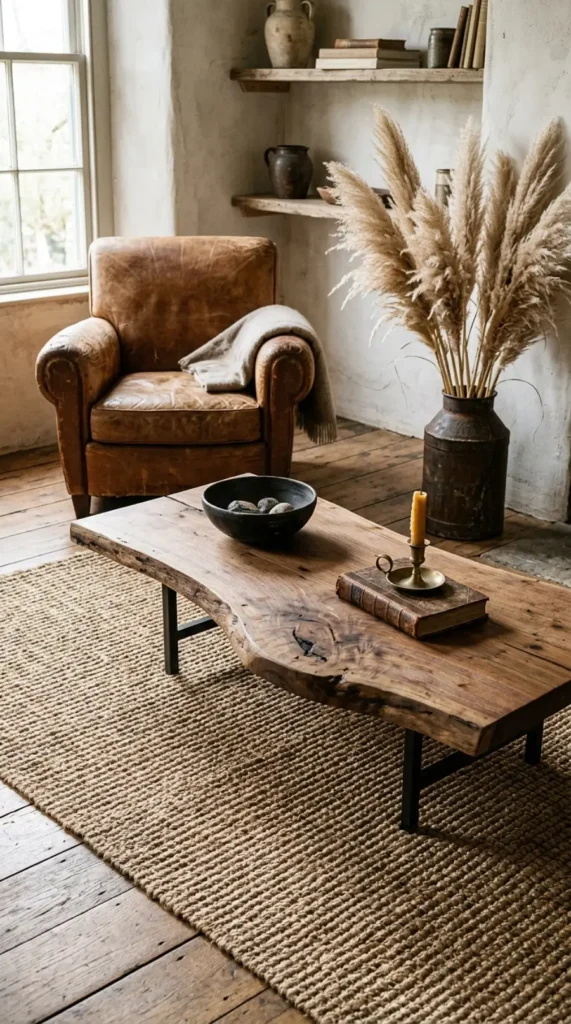
You might choose a rug made of jute or wool and pair it with a coffee table that retains the natural edge of the tree. These materials age beautifully over time and develop a unique character that synthetic fibers can never achieve. Consider how a leather chair deepens in color where your hands touch the arms as the years go by.
Solid wood shelves might begin to bow slightly under the weight of your favorite books and this is a good thing. This slow evolution creates a home that grows alongside you rather than a home that fights to stay new. You are building a space that values the truth of aging over the lie of permanence.
5. Showcase Handmade Ceramics
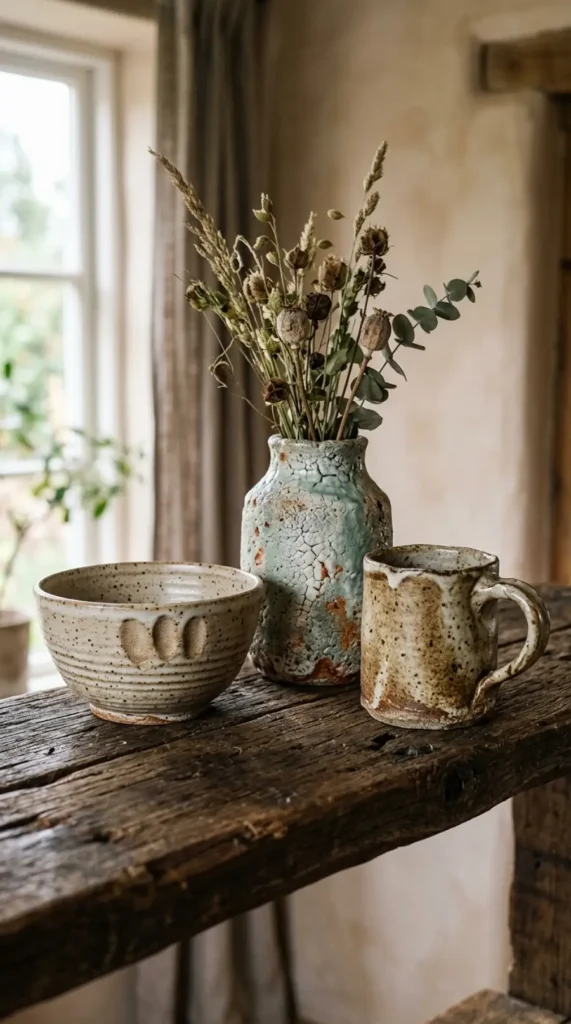
You can bring a sense of human connection into your space by displaying pottery that shows the fingerprints of the maker. Whether it is a slightly lopsided bowl or a vase with a crackled glaze, these items remind you that perfection is not a requirement for beauty. There is a deep comfort in using a mug that isn’t perfectly round.
It acknowledges the human effort behind the object and provides a warmth that machine-made glass simply cannot provide. When you fill your home with things that someone labored over with their hands, the energy of the room shifts. You start to value the process of creation as much as the final product.
6. Curate a “Meaningful Empty” Space
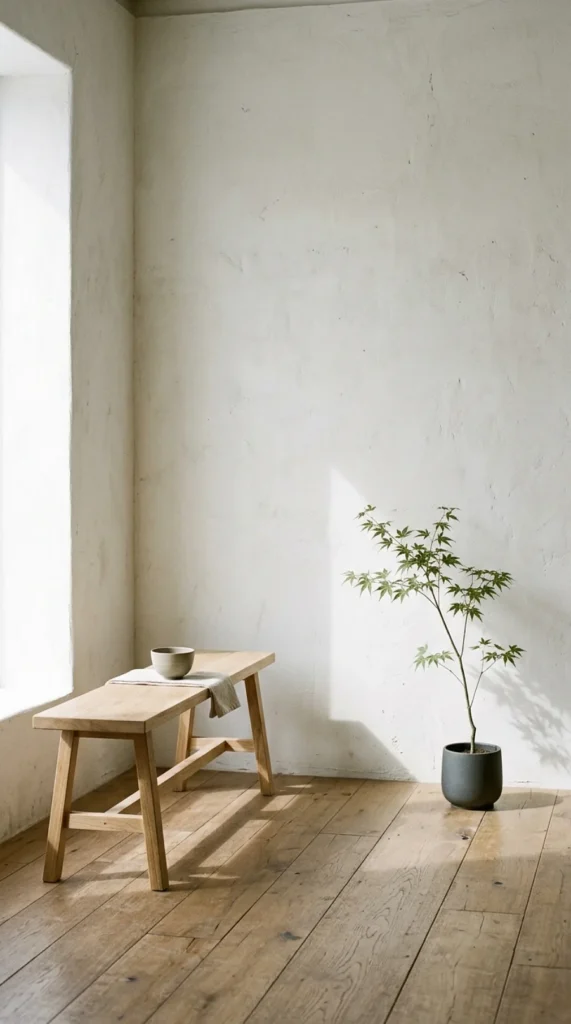
You should resist the urge to fill every corner of your living room with decor or storage solutions. Leaving a shelf half-empty or a wall bare allows the items you do choose to keep to breathe and provides your eyes with a necessary place to rest. In Wabi-Sabi, the space between is just as important as the object itself.
An empty corner is not a missed opportunity for a plant or a lamp but a sanctuary for your mind. It allows the sunlight to move across the floor without hitting an obstacle and this creates a sense of peace that no amount of styling can replace. This is where you find the mental room to think and breathe.
The Art of the Imperfect: Why Your Living Room Needs a Soul
The most dominant spiritual meaning of Wabi-Sabi is that of the unfiltered truth. Biologically, humans are unique among the world’s inhabitants because we produce our living environment entirely from our own history and choices. This act of creation is a massive nudge from the universe regarding your authenticity.
Creating an authentic home is an act of honesty and grounding that connects your physical space to your inner state. When your home reflects your real life, you no longer have to perform for your guests or yourself. You can simply exist in a space that supports your true nature.
The Connection to Inner Truth
Many philosophers and designers associate Wabi-Sabi with the heart and the root because it forces you to be honest about how you live. You might be in a phase where your environment is tangibly affecting your peace of mind. If you constantly tell yourself you will be happy only after a complete remodel, you are trapping yourself.
This philosophy gives you the green light to stop looking for a perfect room and start building an honest one. You are allowing yourself to be happy right now with the furniture you already have. This acceptance is the first step toward a home that feels like a relief rather than a chore.
The Thread of Time
In ancient philosophy, the thread represents the timeline of your life and the durability of your spirit. Wabi-Sabi appears when you need to examine whether your habits support the life you want to lead. You are challenged to reinforce your emotional foundations before you try to impress anyone else with a trendy interior.
Your current environment might be full of hollow trends that do not reflect who you are or what you value. By stripping away the fake layers, you make room for the things that actually matter to your soul. This process of removal is just as creative as the process of adding new things.
Strategic Slowing: The Art of Living Simply
In our modern world, we are addicted to the new and we want the next gadget immediately. Wabi-Sabi is the ultimate antidote to this anxiety because it encourages a much slower pace of consumption. Observe a stone in nature and you will see that it does not pace back and forth nervously.
It sits perfectly and terrifyingly still while the world rushes around it. You can adopt this same stillness by choosing to stop the constant search for more stuff. When you slow down, you start to notice the beauty in the things you already own but have ignored.
Intentional vs. Accidental Living
The philosophy teaches us the difference between intentional purpose and the accidental clutter of a fast-paced life. You might feel like you are just waiting for your style to happen eventually while you keep buying cheap stuff. This cycle of temporary fixes only adds to your mental load and keeps you feeling unsettled.
Instead, you can choose to repair an old chair and position yourself in a quiet environment where you can finally rest. This shift allows you to build a sanctuary where peace comes to you naturally. It makes sure your home is a place of rest rather than a place of constant work and upkeep.
Material Selection for Wabi-Sabi Success
| Material | Aesthetic Vibe | Why It Works |
| Reclaimed Wood | Grounded and Raw | Shows the passage of time through knots and grain. |
| Rough Linen | Soft and Honest | Wrinkles naturally and feels better with every wash. |
| Aged Copper | Deep and Changing | Develops a patina that reflects its environment. |
| Hand-Thrown Clay | Unique and Tactile | Reminds you of the human hands that shaped it. |
The Power of the Organic: Infinite Potential in Nature
You cannot talk about Wabi-Sabi without talking about the Earth and the materials that come from the ground. These elements have texture and weight that provide a sense of history to your living space. In design psychology, this represents a state of being grounded and connected to something larger than a seasonal trend.
Everything in nature is in a state of becoming or a state of passing away. By surrounding yourself with natural materials, you align yourself with this eternal cycle of change. You start to see your own aging process as a natural and beautiful part of the world rather than a problem to solve.
The Cycle of Growth and Decay
Wabi-Sabi sits at the center of the natural cycle where everything eventually changes and ages. Investing in quality over quantity is a power move that shifts your energy from temporary fixes to lasting character. If you feel like you are in a loop of buying and tossing furniture, the philosophy is asking you to break that pattern.
Nature is a spiral and we often circle back to the same basic needs for comfort and stability. By choosing items that age well, you are respecting the resources of the earth and the energy of your own bank account. You are moving away from the “disposable” mindset that fuels so much modern anxiety.
Resilience and Repair
Wabi-Sabi is also a powerful symbol of regeneration that encourages you to fix what is broken. The art of Kintsugi involves repairing pottery with gold to highlight the break rather than hiding it. This practice teaches you that history is more valuable than a perfect surface.
If you have recently suffered a setback, your home should be a reminder that you can rebuild. You can regrow your sense of self and emerge from the repair process more beautiful than before. The gold in the cracks shows that the object is stronger and more interesting for having been broken.
Identifying Your True Style Needs
- Notice which chairs you actually sit in when you are tired.
- Check which colors make you feel calm during a stressful day.
- Identify objects that carry a memory you want to keep.
- Look for items that age well without needing constant care.
Decoding the Living Room: Where Does the Energy Land?
Context is everything when you are arranging your space because the location of an object changes its vibration. A chair in a quiet corner serves a very different purpose than one placed in the center of the room. By understanding these zones, you can better align your physical environment with your mental state.
It helps you see where the energy is stuck in your house. When you move a heavy object or clear a dusty corner, you are also moving your own energy. This is why a simple room rearrangement can often make you feel like a completely different person.
The Hearth: Connection and Warmth
The center of your living room is the space of community where you share stories and release stress. If your room feels cluttered here, it is a sign that you need to remove toxic distractions from your social life. You might be holding onto social obligations or guilt that is clogging your emotional pipes.
The Wabi-Sabi approach helps you handle the work of setting boundaries so you can breathe again. By clearing the “hearth” of your home, you are making space for genuine connection with the people you love. You are choosing depth over the clutter of superficial social interactions.
The Window: Perspective and Light
The window is your most vulnerable space because it represents your connection to the outside world. A cluttered windowsill might signify a need to look at the connections in your personal relationships. You should ask yourself if you are afraid of letting the world see the real you behind a polished facade.
If your view is blocked, your subconscious is shouting for attention regarding your public life and your truth. Clearing your windows allows the light to enter and helps you see the path ahead with more clarity. It is a physical act that mirrors a mental shift toward being more open and honest with the world.
Design Elements Comparison
| Feature | Modern Minimalist | Wabi-Sabi |
| Surface | Polished, Mirror-like | Textured, Matte, Scratched |
| Lines | Sharp, Geometric | Soft, Asymmetric, Organic |
| Lighting | Bright, Integrated | Dim, Indirect, Natural |
| Vibe | “Look at me” | “Be with me” |
Color Magic: The Vibration of the Room
The color of your walls and furniture adds a layer of nuance to the message your home sends to your nervous system. Choosing the right tone can settle your mind or give you the energy you need to grow. These colors act as a silent backdrop for your daily experiences and set the tone for your internal world.
You should pay attention to how a color makes you feel in the morning versus the evening. A color that looks great in bright sunlight might feel heavy or depressing when the sun goes down. Wabi-Sabi encourages you to test colors in your actual space before making a final decision.
Aligning Tones with Your Spirit
- Use soft greys when you need to focus on inner peace.
- Bring in brown tones to feel more stable and grounded.
- Select muted greens to encourage healing and growth.
- Choose warm creams to invite a sense of purity and rest.
Practical Steps: How to Start Your Transition
You have read the meaning and you have seen the ideas, so now you must decide what to do next. The shift toward Wabi-Sabi starts with small choices that honor your reality over your expectations. You can use the honesty test to see what items in your home actually carry meaning for you.
This small act of evaluation helps you identify where your space feels fake. As you clear a corner, you should set a simple intention to release the need for perfection. For the next two days, try to be hyper-aware of how your physical body feels in your home.
These small shifts in perspective will eventually lead to a more authentic and restful environment. It is about taking back control of your space and your happiness. You are the master of your environment and you decide what stays and what goes.
Daily Habits for an Authentic Space
- Stop fixing every minor scratch on your wooden surfaces.
- Choose one handmade item to place in a prominent spot.
- Clear one flat surface completely to allow for mental rest.
- Switch off overhead lights in favor of warm, local lamps.
Wabi-Sabi Living Explained: Addressing Your Core Design Doubts
Does Wabi-Sabi mean my house has to look messy?
Wabi-Sabi interior design prioritizes intentionality and authenticity rather than creating a disorganized or cluttered living environment. This philosophy celebrates inherent imperfections such as floor scuffs or weathered patinas while mandating the removal of non-functional items. A balanced home remains comfortable and lived-in because every object occupies the space for a specific, meaningful reason. The objective is to achieve a clean atmosphere derived from honesty instead of masking the daily realities of domestic life.
Is it expensive to decorate a room in the Wabi-Sabi style?
Wabi-Sabi is fundamentally a budget-conscious design philosophy that emphasizes utilizing existing possessions and repairing damaged goods. Homeowners are encouraged to refinish legacy furniture or repurpose natural textiles rather than acquiring new, mass-produced inventory. This approach focuses on quality and longevity, which ultimately reduces long-term expenditures associated with fleeting aesthetic trends. You are investing in the historical soul of an object rather than its commercial brand name or contemporary market status.
How do I incorporate Wabi-Sabi if I live in a modern apartment?
Integrating Wabi-Sabi into a contemporary apartment requires introducing contrasting textures and organic materials to balance the sharp lines of modern architecture. Elements such as rough-hewn wooden stools, heavy linen drapery, or raw stone accents can effectively modify the vibration of a sterile environment. Strategic use of indirect, warm lighting creates necessary depth and shadows to ensure the space feels grounded rather than like a commercial showroom. The primary goal is to establish a personal sanctuary that provides an authentic escape from a fast-paced and hyper-perfected society.
Can I mix Wabi-Sabi with other interior design styles?
Wabi-Sabi integrates seamlessly with several alternative styles including Scandinavian minimalism, Japandi, and refined industrial aesthetics. The core emphasis on authenticity and natural materials provides a stabilizing influence for environments that might otherwise feel clinical or overly aggressive. Homeowners may maintain contemporary furniture while introducing handmade ceramics and vintage textiles to establish a sophisticated visual balance. It is imperative that these additions feel genuine and serve a purpose beyond meeting a rigid aesthetic requirement.
What is the best way to handle clutter in a Wabi-Sabi home?
Clutter is viewed as energetic static that obscures the inherent beauty of your living environment and personal path. In a Wabi-Sabi space, owners must rigorously audit their belongings to ensure every visible item serves a clear function or maintains a deep emotional bond. This disciplined editing allows the room to breathe while preventing the accumulation of items that are broken beyond repair or lack soul. Removing unloved objects facilitates the quiet, intuitive knowing that is central to maintaining a balanced and peaceful interior.